
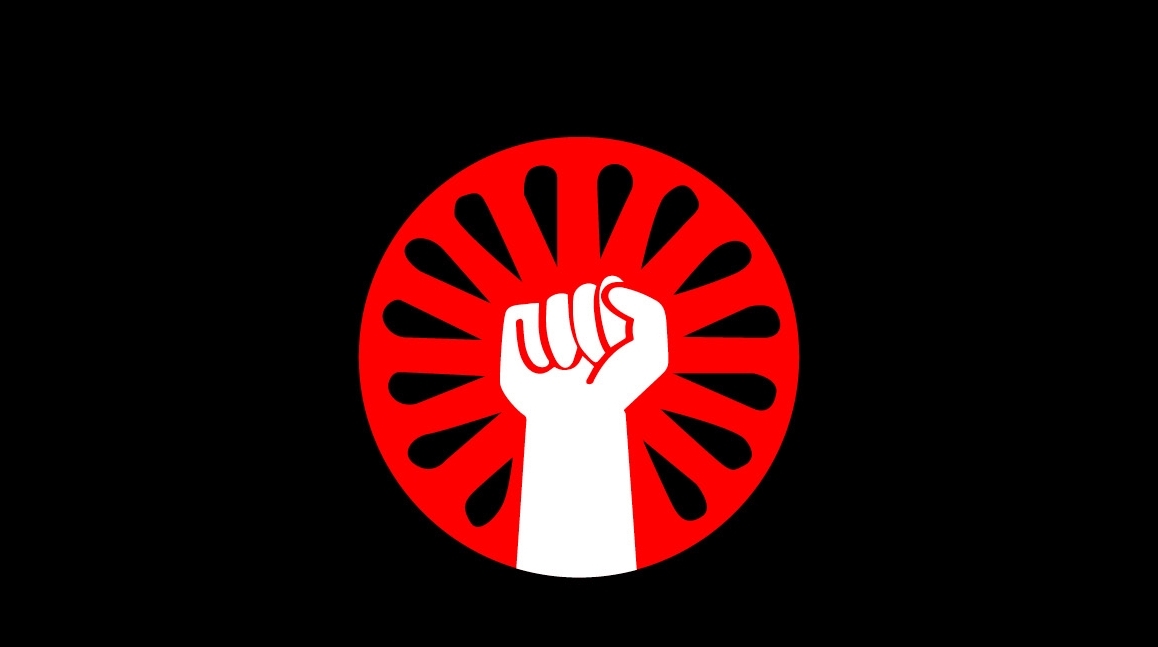
The Roma resistance in Auschwitz is an example of the Roma libertarian spirit
Remembrance plays an important role in the process of dealing with what happened, and commemorative practices help ensure reconciliation, healing, and non-recurrence of past crimes. Only the memory of human rights violations can nurture the future of human rights in the world, thus providing an essential link between the past and the future and changing the narrative of the Roma, and organizing the Roma community as the foundation for new political victories. The resistance of the Roma in Auschwitz is a very significant event because it shows the resilience and perseverance of the Roma community in the most difficult moments.
History has never been kind to the Roma because, according to the great European powers, they were rejected and persecuted throughout Europe due to their specific way of life and culture. In the Habsburg monarchy, Maria Theresa, by her laws, forbade Roma to move freely on the streets and speak their language. The practice of sterilizing Roma women without their consent during communism in Czechoslovakia in response to the high birth rate in the Roma community is well known. This is a gross violation of human rights. But the worst and most horrific examples of persecution and killing are World War II.
Shortly after the start of World War II in 1939, the Nazi regime decided to remove all Roma and Sinti from the territory of the Third Reich. They were ordered to move and placed in Jewish ghettos and camps for Jews. The first deportation took place on May 16, 1940, from Ravensburg to camps in occupied Poland.
On December 16, 1942, the deportation of all remaining Sinti and Roma was ordered. A gypsy family camp known as the "Zigeunerlager" was established in the Auschwitz-Birkenau B II sector. The Zigeunerlager was a "mixed" camp, with men, women, and children imprisoned together.
On May 15, 1944, 6,000 Roma in the camp were warned that the Nazis were planning to execute them because they were no longer able to work, and the Nazis themselves planned to bring in more capable, healthier, and less tortured people to work in the camp. Little is known in the literature about who is an informant, but the Roma who were in the camp understood what fate awaited them because they saw other camp inmates from the neighboring camp protesting, because the military guard led them to the crematorium near the Roma camp. On May 16, 1944, more than 600 Roma prisoners did not show up for the usual morning roll call but barricaded themselves in their barracks. They broke into the equipment warehouse and armed themselves with hammers, picks, and shovels, and dismantled the wooden parts of the bed on which they slept to make weapons. As a result of their defiance, no Roma or Sinti were killed in the gas chambers that day. This act of resistance upset the Nazi regime. Fearing rebellion across the camps, 3,000 Roma were transferred to other camps. On August 2, 1944, the Nazis poisoned the remaining 3,000 Roma prisoners in the B ll e camp.
The brave uprising of May 16, 1944 - the struggle for the right to life and humanity - is widely called Roma Resistance Day.
The Youth Department of the Council of Europe has devoted an entire chapter to "Resistance" in the Handbook on the Right to Remembrance for educating young people about the genocide of the Roma.
What we young people can learn from this event is that we must not agree and turn a blind eye to the growing nacification of societies across Europe, which is reflected in the increasing attacks of ultra-right groups on Roma settlements but also on the media narrative against Roma as and anti-Roma reporting on social media. Our ancestors gathered strength and together they opposed the Nazi guards in the camps, showing their fighting spirit and freedom of freedom, even though they did not have firearms and war equipment like them. They showed unity and togetherness with each other, and thanks to that, on that day, May 16, no Roma was poisoned by gas in the gas chamber. The idea of unity and togetherness that was present that day is very important because thanks to it we can overcome racism and injustice. We, as a Roma community, must be united around the ideals of equality and freedom and persevere on the path to emancipation and respect for human rights. For centuries, we have been discriminated against and oppressed, and silenced because the elites were afraid of organized resistance and protest. This event is very inspiring not only for the Roma community but for the whole world because it can be viewed through the prism of David's fight against Goliath because it is a fight where it is not important to have firearms and other military equipment but freedom of spirit, fighting spirit, desire for victory, the struggle for bare life and tenacity, all that the Roma community possessed.
When we make a small comparison of the then and current generation of Roma, in terms of reducing the poverty rate, increasing the number of educated, and improving housing conditions, there are significant changes. European countries are working hard to improve the position of Roma, where new generations are more educated and enjoy all the rights guaranteed by the constitution. However, unfortunately, in practice, this is not always the case and it is necessary to achieve full emancipation and liberation from prejudices and provide each individual with normal living conditions. We, as a younger generation, have better living conditions compared to our ancestors, but we must continue to remain united and organized in order for our communities to be even more progressive.
Source
Đurić Rajko. Istorija holokausta Roma. Beograd: Politika, 2018.
https://www.coe.int/en/web/roma-and-travellers/-/16-may-1944-a-day-to-remember